Showing posts with label Alternative WWII. Show all posts

Thursday, 11 June 2020

Nazi Ahnenerbe Sturmtruppen At The Centre Of The Earth

SS-Kavallerie-Brigade Schäfer

The SS Ahnenerbe expedition to Tibet discovered a sacred cave that Buddhist Monks believed led to an underworld where the sacred city of Shambhala was located. The monks were persuaded to reveal the location of the cavern by Her Flick, a Gestapo agent spying on Himmler's Expedition for Goering.

The cave certainly opened into somewhere, a mysterious world inhabited by prehistoric monsters as detailed by Jules Verne in his supposed novel 'Journey to the Centre of the Earth'.

Local humans had domesticated a bipedal carnivore. The Stormtruppen seized various examples for study and a breeding program. Unfortunately, all the animals acquired were males, as indicated by the mating display on the head. Nevertheless they trained some to be SS-Kavallerie abd named their unit after the expedition leader, Dr Ernst Schäfer.

Trooper With Light Machine Gun

One soldier in each troop was armed with an MG 34. The mounts were surprisingly indifferent to gunfire.

An Unfortunate Confrontation

Alas, the expedition got lost in the complex of tunnels trying to reach the 'surface' and emerged in Afghanistan, only to find the world was not quite as they remember it.

Models by Eureka.


Monday, 19 February 2018

Otto Rahn, Ahnenerbe SS

Otto Rahn hunting for the Holy Grail under a Cathar Fortress in Languedoc: note the miniaturised zero-point 'bell'.

Otto Rahn was an 'awakened' (i.e. rune-magician) archaeologist/historian who was a member of the Ahnenerbe SS and an expert on the Holy Grail.

Officially he died of an accident in 1939, but research by Kenneth Hite, published by Osprey, suggests he was active until '45.

Otto Rahn

He is believed to be part of the inspiration behind the Indiana Jones movie.

Otto Rahn

This model by Lucid Eye is perfect to represent this fascinating and complex character.

The End of Rahn?

After '44, the trail goes cold but Hite speculates that he may have raised something he couldn't put down.


Tuesday, 14 November 2017

Adeptus Mechanicus Galvanic Servohauler 2 - Mobile Crane

This is a a great model of a crane on a rotating platform attached to what looks like a railway wagon low loader. I chose to attach the claw to the end of the chain as being more 'Grimdark' but a standard hook is also supplied.

The Techpriest is there purely to show scale but the fire extinguisher and toolbox come with the kit.

I glued the fire extinguisher onto a corner of the bogie.

I can see this looking good in a Steampunk or Weird World War II setting.

This whole kit set is great value for £25.

Highly recommended.


Wednesday, 14 June 2017

Sea Lion: Operation Gigant

So what, I hear you ask, have I been slaving over recently?

The answer is above, Operation Gigant, the German second front in the invasion of Britain.

With new units, new factions and scenario ideas, the Germans move north, yay, unto the hallowed fields of Nottingham...and thereabouts.

Yours for a princely sum of £12.99; on preorder now at Warlord Games.


PS I nearly titled this "Woops! I did it again."


Friday, 14 October 2016

SS-Ahnenerbe Air Defence Base

 Germany, 1945.

An SS-Ahnenerbe Enhanced Gorilla guards a Bachem Ba 349 Natter rocket point defence interceptor. Note that the weapon in the nose of the plane is an experimental Vril-Ray that attacks the minds of a bomber crew rather than the plane itself.


The model gorilla is a Reaper Bones miniature; the Natter was constructed from a 1:48 plastic model kit.


Thursday, 1 September 2016

Bolt Action Fight them On The Beaches - Sea Lion


Operation Sea Lion, as 'any phule kno', was the German code name for the invasion of Britain, September 1940.

This will be my next book for Warlord Games/Osprey and it is being pre-advertised on Amazon.

The book is finished except for the scenarios, and new models are in the pipeline.

There will be new scenarios, new army lists of various types, and lots of new units and vehicles, which may be of interest to those who play Very British Civil War using Bolt Action Rules as there are rules for improvised equipment.

This has been great fun to do.


Monday, 22 August 2016

Bolt Action, SS Ahnenerbe Vril Fighter

As well as being tricky to manufacture, the Haunnebu Vril Saucers required pilots who were both skilled flyers and Geweckt. It was rare to find an individual who encompassed such unlikely talents. One solution was the Nachtzehrer Vril Fighter. This all-weather multi-role plane could fulfil a variety of roles from heavy fighter to precision medium bomber.

The Nachtzehrer was powered by Vril energy run through a turbofan jet. The pilot sat in a reclining posture in the front cockpit and flew the plane much like any other jet. Behind him sat a Hexeningenieur who kept the systems working through rune magic and an expression of Will.

The Nachtzehrer  was armed with two 30mm cannon in the wing roots operated by the pilot as in a normal fighter.

Another 30mm cannon was positioned in the tail controlled by the Hexeningenieur using dowsing rods.

This photo of a Nachtzehrer lifting off shows the weapon bay doors open. A Todesbruderschaft bomb, also guided by the Hexeningenieur using the dowsing rods in the tail can be clearly seen in the internal Bay,

Vril energy confers VTOL capability, much like in the Haunnebu. The Nachtzehrer is shown in the process of converting to level flight. It is equipped with normal landing gear so that the pilot can glide it down to a landing even if the Hexeningenieur is insensible - a not uncommon side effect of application of Will.

The model is scratchbuilt from various odd bits I had lying around and has a 12" wingspan.


Wednesday, 17 August 2016

Bolt Action - SS Ahnenerbe Detachment Daemon

Painting up a 'Daemon Aircraft' for my Bolt Action SS Ahnenerbe Detachment.

This is the base undercoat.


You first undercoat black, and then spray Humbrol multi-effect over the top in thin layers. I used amethyst.

It's a bit dificult to see on static pictures, but the colour changes with the angle of the sunlight, like with modern car paint.

Probably will need another coat or two but getting there.


The colour shimmer.


Thursday, 14 July 2016

Secret Nazi Airbase Captured


A friend who is both a Bolt Action Player and an aeroplane modeller sent me this recently. A phone shot from one of his games.

Monday, 9 May 2016

Romney, Hythe & Dymchurch Light Railway Armoured Train

My daughters used to like a ride on the Romney, Hythe & Dymchurch Light Railway when they were younger.

While working on my latest wargame project I came across this: Romney, Hythe & Dymchurch Light Railway Armoured Train.

And before anyone laughs, they are credited with an He111, Me109 and Do17 during the Battle of Britain....and there's not many light railways with that record.

Tuesday, 3 May 2016

The First Jets - Huckebein

Red 4 & Yellow 4, two Focke-Wulf TA183 Huckebein in dangerously close formation at high altitude

After the failure of the Flitzer Project, Focke Wulf turned back to the 183. This was a true swept wing design. Swept wings reduce drag and the formation of shock waves as a plane approaches the speed of sound, i.e. transonic speeds.

The 183 had the usual problem of the poor quality early jet engines being unable to cope with long air intakes, hence the short body. So the tail had to be thrown back leading to doubts about flutter. The 183 prototype was still under construction when British troops captured the factory in April, 1945.

German designers knew more about swept wing designs than anybody else but a true understanding of the maths didn't come until later. Swept wings are fast but they introduce a whole new set of problems. Firstly landing speeds go up and the 183 would have had a narrow track landing configuration as there was no room in the thin wings for the wheels. Couple this to makeshift airfields and you have potential issues.


IAe 33 Pulqui II

The 183 would have had a 600mph top speed and a 47K' ceiling but would it have worked? The omens are not good.

After the war, Tank moved to Argentina and designed the IAe 33 Pulqui II as a successor to the pedestrian but functional Meteor. The plane is a reworked 183, with a British engine allowing a longer body.

And it was a dog with awful stability and wing-tip stall issues.

 As a swept wing plane approaches stall speed, it loses lift from the wing tips, changing the centre of gravity and pushing the nose up, increasing the stall in a vicious positive feedback.

Korean war jets.

The landing behaviour of the Sabre gave rise to an all new problem for pilots - the Sabre Dance. Apparently watching novices porpoise towards the runway on landing approach became quite a spectator sport.

The British-engined MIG 15, probably the best of the early swept wing fighters, used a wonderfully Slavic crude but effective way to control the Sabre Dance: runners on the wings that stopped the air sliding down and off the wing tip.

Hawker Hunter

The next generation of western transonic fighters had 'notches' in the wing leading edge which had much the same effect as the MIG's runners.

As far as I know, neither of these fixes were known to German jet designers in the 1940s.

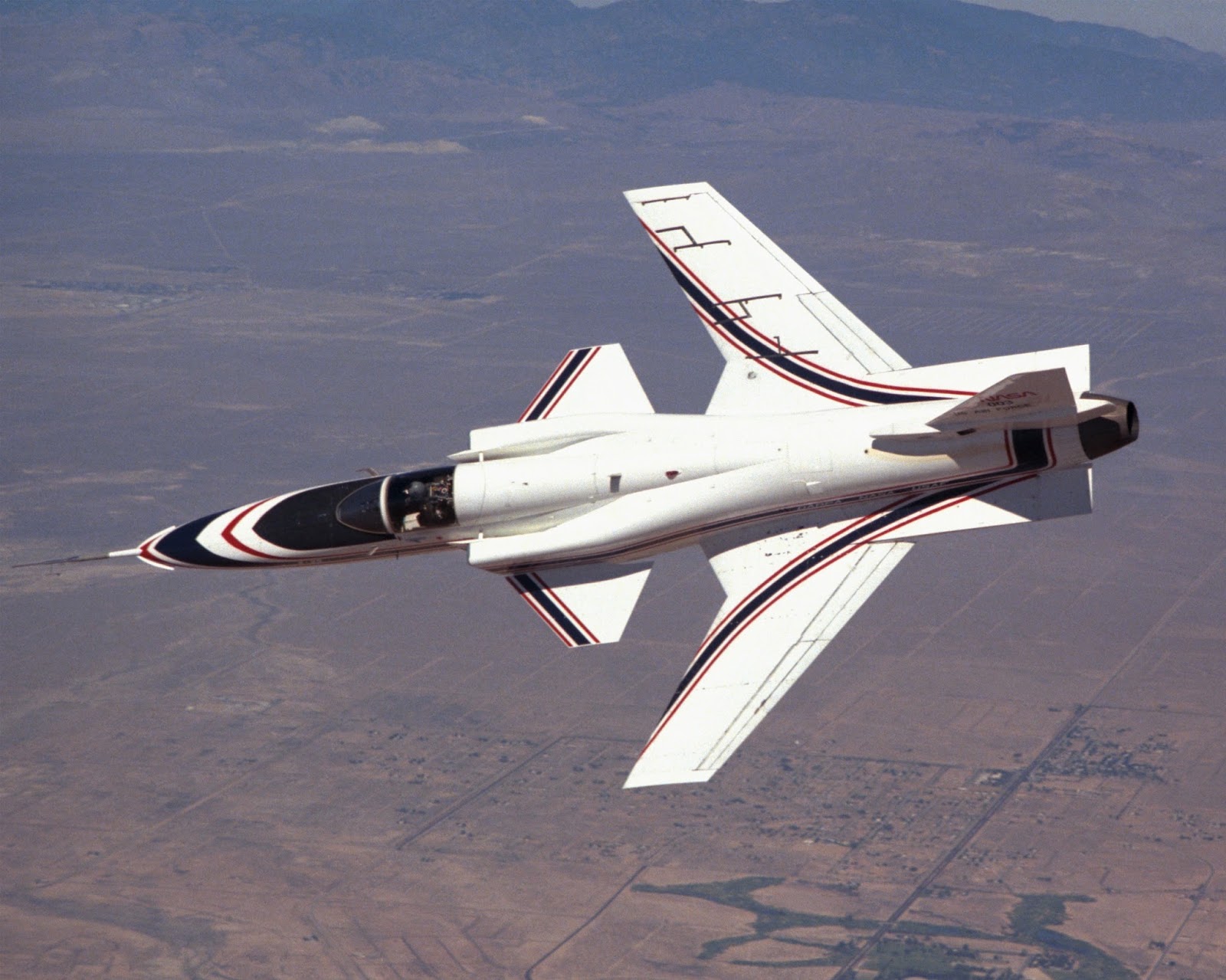
Grumman X29 research aircraft

The Germans did experiment with forward-swept wings which avoid the wingtip stall issue all together by stalling first at the wing roots. So why has no one ever built a forward-swept wing fighter?

Well, in a sharp climb the wings warp and the nose lifts, tending to push the plane into a stall.

At least one American transonic fighter made the wing tips wider than the wing root, which also helped to prevent wing tip stall.

And so it goes.


English Electric Lightning going supersonic: look where the shock waves form, wing tips and the cockpit area.


Designers did eventually get it right. The Lightning was the ultimate supersonic swept wing but it wasn't really a fighter. It was a point-defence interceptor where speed and rate of climb trumped all other factors. It had the same function as the Me 163 rocket plane.

Along with the Bloodhound rocket/jet powered missile the Lightning was the last ditch defence of the dispersed British V Bomber airfields. It's job was to keep away Soviet nuclear bombers just long enough for the V Bombers to get airborne and clear.

The Lightning had to use braking parachutes to land and we lost one a month to crashes in the 60s but it climbed at a near vertical inclination straight off the runway. And by God it was fast.

So would the FW 183 been part of the Wonderwaffe? Only if they had ten more years to get it right.

Friday, 15 April 2016

The First Jets - Spider Crab and Flitzer


Models by Revell, painted and photographed by author.

The ramshackle mess that passed for government in Nazi Germany could not bring itself to admit that they would soon need air defences so fighter aircraft had a low priority and the Me 109, a 1934 design, soldiered on in increasingly hostile skies.

Meanwhile the German fighter designers amused themselves by churning out ever more exotic designs, each seemingly trying to outdo the other in bizarre innovation. Focke-Wulf had two promising jet fighter designs among the myriad paper studies of 1943, the type 5 & 6. The Type 6 was nicknamed 'Flitzer'.

The Flitzer adopted wing root air intakes and a short body reducing the distance from air intakes to  the jet exhaust. Early jets were extremely inefficient if fed by long tubes, which is why the 262 and Meteor had wing mounted engines. The tail plane was mounted on two booms clear of the jet exhaust. Increasing power allowed the use of one engine rather than two.

In July '44, not even the Nazis could ignore the daylight bomber raids and the order went out for the design to a new high performance jet fighter coupled with a cheap Volksjäger.

The Flitzer was one of FW's  bids for the high performance jet contract, using an auxiliary rocket motor to boost the plane to high altitudes quickly to intercept bomber streams. The concept was abandoned in September because the Flitzer required strategic materials in short supply and because it was considered too slow when compared to radical swept wing designs- more about them later.

The irony is that De Haviland in Britain was working on a similar design, the Spider Crab or Vampire as it was later known, in 1943. It was delayed until '45 when the allocated Rolls Royce engine was sent to Lockheed so they could experiment with jet fighters. The Vampire/Venom was a more robust design than the Flitzer and went on to serve in many airforces as a fighter, strike fighter, night fighter and naval fighter (as the Sea Venom).

Incidentally, the Vampire had a top speed of around 550mph, as against the Flitzer's estimated 600mph. But of course the Vampire flew whereas the Flitzer never got past the mock up stage.

The Vampire was armed with four 20mm cannon and had hard points for 1,000 lbs of stores. The Flizter would have had two 300mm cannon - plus two 20mm if it could have carried the extra weight.


Tuesday, 12 April 2016

The First Jets - Messerschmitt Myths

A fast moving Me 262 Sturmvogel overshoots a breaking Gloster Meteor.


This never happened, of course, except on the wargames table.

Messerschmitt Myth No 1: The ME262 was the world's first operational jet fighter.
Actually, no: 616 RAF Squadron was operational with Meteors a few weeks before the 262 started operational service with the Luftwaffe.

Messerschmitt Myth No 2: The Me262 was designed with novel high technology swept back wings to make it a fast subsonic fighter.
Actually , no: The 262's wings are slightly swept but no more so than many other aircraft of the period and the reason was to move the CG aft. This method of controlling CG dates back to some of the very earliest pre WWI  plane designs. The 262 was an aerodynamically clean well designed fighter that could get up to Mach 0.86 (circa760 mph at sea level) but it wasn't swept wing. The 1945 Meteor F4 was about 50mph slower but had better engines capable of faster break manoeuvres without flaming out.

A duel between a Meteor F3/4 or 262 would probably depend on position and pilot skill. The 262 pilot would have attempted a firing pass on a dive zoom, while the Meteor pilot would have tried to suck his opponent into a high speed scissors or similar.

The photo was taken by me using Oxford Diecast 1:72 models and Paint Shop Pro.

Tuesday, 18 November 2014

Bolt Action: Medway Charity Wargame

The Medway Club meets on a Tuesday  - and last Tuesday was the eleventh day of the eleventh month of the year twenty fourteen.


Accordingly, we decided to hold a charity wargames day with all club-subs plus any additional donations to The British Legion.

We had a great turn out for such a small club on a miserable night. The younger players set up two games of Games Workshop's Warhammer 40K  and a Lord of the Rings scenario while those gamers of, shall we say, more mature years played a Bolt Action Tank War Megagame designed by club member Michael Valls-Russel.

We intended to play Falaise '44 but it ended up more like Goodwood as every one brought so many 28 mm AFVs that we couldn't get them all on the tables!

I played a Chuchill company in the centre supporting a British infantry attack on a French village at a key road junction. We had British and American armoured on each flank in support.

Michael gave each player a private victory condition in addition to the team victory.

Mine was that I had learnt from René Artois, Hero of the Resistance, that the painting of the Fallen Madonna with the big Boobies by van Klump was hidden at the Chateaux with the Gateaux. We agreed to 'acquire' and 'protect' the painting until the end of the war.

Unfortunately the Chateaux with the Gateaux was on our left flank in an American attack sector.

The British bombardment got off to a good start by blowing up a Hanomag on the German left flank and pinning a Tiger company.

And similar good results were achieved on the German right flank.

An early success for my Churchill company, I immobilised a Tiger advancing up the road with a 6pdr shot into the side. A Firefly from the armoured squadron on my right promptly brewed it up with a 17pdr shot right through the front armour.

Woop, woop.

The German left flank was soon in tatters with brewed up Hanomags and pinned Tigers.

I and my infantry partner had a worrying moment when a Panther troop came up the main road under the cover of an '88 and a quod-AA gun to reinforce the German centre.

Note: the white slip in the centre is one of Michael's secret personal victory conditions.

Then something very odd happened. What looked like an ice-cream van made a run down the road across the British centre. I raked it with MG fire from Churchills until it burst into flames. This was unfortunate as it apparently contained the German regimental pay chest which had been 'liberated' in the confusion by  Unteroffizer Schmidt .

The Reichmarks were all carboneezy. Ah well.


The carnage of armour on the right flank was unbelievable. A German Pak hidden in a wood knocked out a number of our Shermans with side shots before it was comprehensively crushed.

The British secret weapon, the deadly Typhoon, sweeps across the Panther troop laying down a barage of rockets.

You can just see what's left of the German pay chest burning in the foreground.

The Americans capture and comprehensively loot the Chateaux with the Gateaux. Damn!


The right flank became completely obscured by smoke from burning tanks so I disengaged my Churchills and raced (OK ground very, very,  slowly at the speed of a British infantry tank) for the Chateaux.

I had only lost one Churchill with one immobilised. They may be only armed with pop guns but they do have decent armour.

On the left flank the 'Tigers are Burning'.

I motored a Churchill up to the Chateaux and after a free and frank exchange of views with my American allies, involving loading the 6 pdr with HE, I acquired the bratwurst sausage in which was hidden the painting.


The Fallen Madonna with the Big Boobies by van Klump was auctioned at Sotheby's after the war by an anonymous seller after being mysteriously 'found' in a scout hut in Kent.

Incidentally, we raised £112.50 for the British Legion.

Special thanks are due to Michael Valls-Russel who designed the game and Mik Hollands of Gladius Game Arts whose energy drove the whole evening. Well done guys and kudos to everyone who showed up and donated so gererously.

We might do this again next year, and in a public venue.


Thursday, 21 November 2013

FreiKorps Oberland Garford-Putilov Armoured Car


 JTS is staying with a 1930s theme today with one of the weirdest armoured fighting vehicles ever designed.

The Garford-Putilov was a heavy armoured car built in Russia during WWI based on imported Garford Trucks. It was desperately underpowered, 10 hp, giving a top speed of around 10mph. Like all improvised armour on civilian chassis it was overloaded and top heavy.

Off road performance was woeful.

It was armed with three maxim guns in separate turrets and a 76mm light howitzer in the oversized rear turret. The howitzer was enclosed by a weird flash tube.
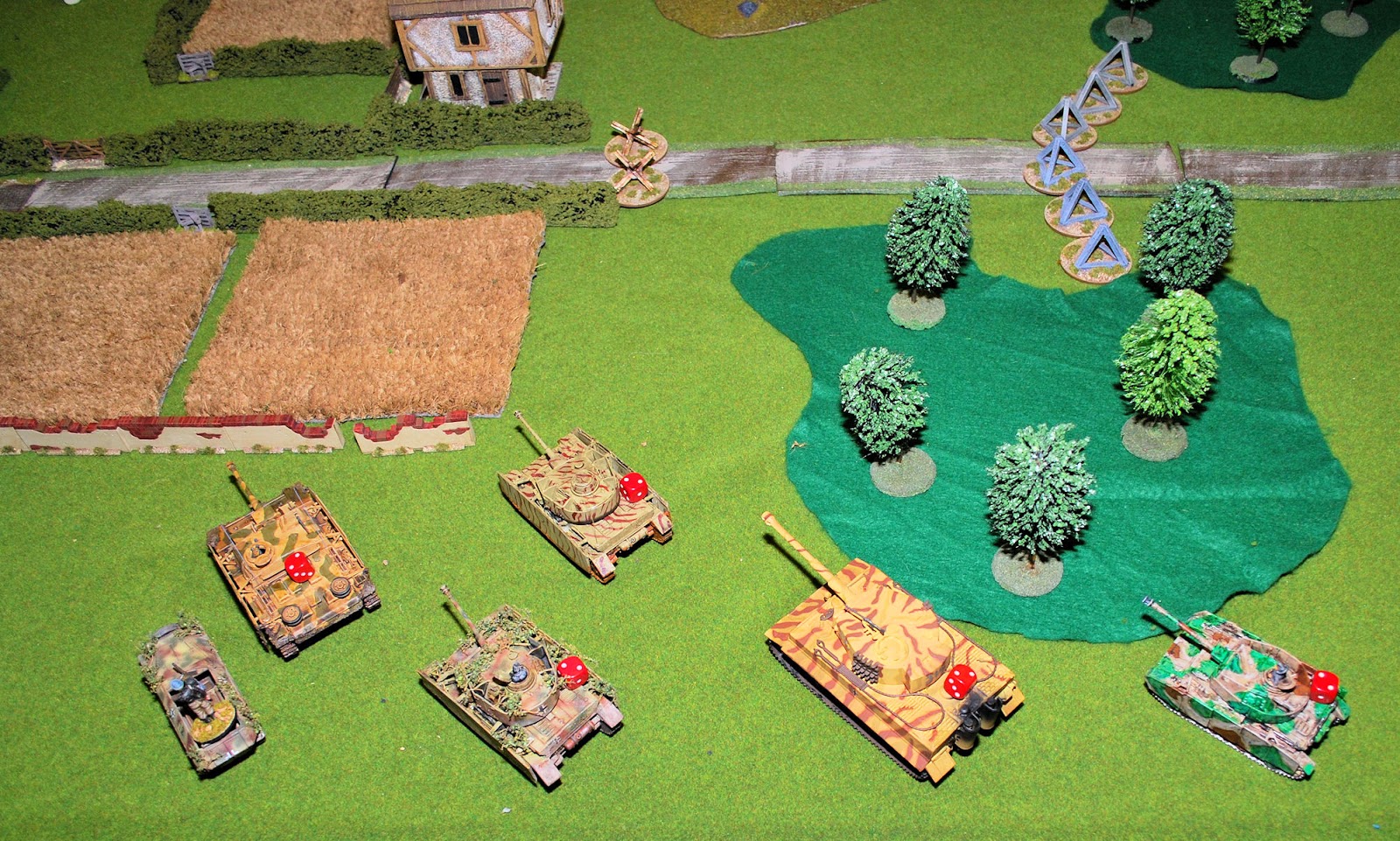


The weird turret makes this a wonderful vehicle for Alternate WWII. It could be a vortex gun, for example.


A number were captured by the Germans and used by the Freikorps. The Freikorps were psychotic right wing thugs built around the heavily trained and psychologically conditioned Imperial Stormtrooper units. They went on to form the nucleus of the SA and theWaffen SS and used many of the same insignia.


The photos show a G-P car used by the Bavarian Freikorps Oberland, which included such alumni as Heinrich Himmler and Josef Dietrich.

The standard Freikorps logo was the Totemkopf,  the skull and crossbones of the stormtroopers but there were many others.


The Bavarian Oberland used the edelweiss as a badge and hence an eidelweiss-totemkopf.


So I have used it as the bonnet flag for my G-P.


The poster on the side of my model represents the Thule Group, a mystical bunch of weirdos that transformed into the Nazi Party.

Kenneth Hite mischievously links the Thule group with the Freikorps Oberland in his fun book on the Nazi Occult so I couldn't resist doing the same. A great link for Weird WWII ideas.